The Definitive Guide to Bitcoin Inheritance
Introduction: The Sovereignty Paradox
Bitcoin introduced the world to true digital sovereignty. For the first time, individuals can hold wealth securely without relying on banks, governments, or custodians. This power is encapsulated in the phrase: “Not your keys, not your coins.”
However, this profound responsibility creates a unique challenge when planning for the future: The Sovereignty Paradox.
How do you ensure your Bitcoin is securely transferred to your heirs after you are gone, without compromising your security today or reintroducing the trusted third parties Bitcoin was designed to eliminate?
- If you simply give your heirs a copy of your keys now, you increase the risk of theft during your lifetime.
- If you hide your keys too well, your heirs may never find them.
- And if you rely on a company to manage the transfer, what happens if that company fails or is compelled to freeze your assets?
The stakes are high. Blockchain analysis firms estimate that several million Bitcoin have been lost forever — inaccessible because the private keys are gone due to misplaced hardware, forgotten passwords, or the death of the owner. While it’s impossible to know exactly how many of these losses are due to failed inheritance plans, the absence of a proper succession strategy is a significant, preventable risk that threatens the generational wealth of Bitcoin holders.
This guide provides a comprehensive framework for navigating this challenge. We will explore the landscape of Bitcoin inheritance solutions, evaluate their trade-offs, and introduce the emerging standard for securing your Bitcoin for generations.
Chapter 1: The Challenge of Bitcoin Inheritance
Understanding why Bitcoin inheritance is difficult requires understanding what Bitcoin is.
Bitcoin is a “bearer asset,” similar to physical gold. Whoever holds the private keys (often represented as a 12 or 24-word seed phrase) controls the asset. The Bitcoin network does not recognize identity, death certificates, or court orders. It only recognizes the cryptographic proof provided by private keys.
This creates several critical challenges for inheritance:
- The Security/Accessibility Tension: To protect your Bitcoin during your lifetime, you want the keys to be difficult to access. To ensure inheritance, you want your heirs to be able to easily utilize these keys when the time comes. A plan that makes it too easy for your heirs might also make it too easy for an attacker.
- The Complexity Barrier: Many secure setups (like multisig wallets) require significant technical expertise to recover. Heirs, often non-technical and grieving, may be unable to navigate the recovery process, leading to loss of funds.
- The “Wrench Attack” Risk: As the value of Bitcoin increases, so does the risk of physical coercion or extortion (the “$5 wrench attack”). Security data indicates a disturbing trend of violent crimes and organized crime targeting known cryptocurrency owners. Simple inheritance plans, such as leaving keys in a home safe, create a single point of failure that exposes both you and your family to these targeted attacks.
- The Longevity Problem: When planning for generational wealth, you are dealing with timescales of decades. How can you trust that a company assisting with your inheritance will still be operational in 30 or 50 years?
A robust inheritance plan must solve all these problems simultaneously.
Chapter 2: A Framework for Evaluating Inheritance Solutions
Not all inheritance solutions are created equal. To choose the right path, we need a framework for evaluating the trade-offs. We propose six essential criteria:

1. Sovereignty (Trust-Minimization)
Does the solution rely on the ongoing operation or permission of a third party (a company, lawyer, or government) for the inheritance to execute? A truly sovereign solution minimizes trust, ensuring that the plan works even if the provider disappears.
2. Security
How well does the solution protect the Bitcoin during the owner’s lifetime? It must be resilient against digital theft, physical coercion, and accidental loss. Multisignature (multisig) technology, which requires multiple keys to move funds, is the standard for high security.
3. Heir Experience (Accessibility)
How complex is the recovery process for the intended heirs? A plan is useless if the heirs cannot execute it. Solutions range from fully autonomous (requiring technical skills) to fully assisted (guided by experts).
4. Privacy
Does the solution require you or your heirs to disclose sensitive personal information (KYC)? Inheritance is a sensitive matter; the best solutions are built on cryptographic proof, not identity.
5. Flexibility
How easy is it to update the plan? Life changes. You may need to change beneficiaries, replace compromised keys, or adjust the timing of the inheritance.
6. Legal Integration
Can the solution be configured to involve a trustee or integrate with existing legal estate plans (wills and trusts), should the owner choose to do so?
Chapter 3: The Spectrum of Inheritance Solutions
Inheritance solutions exist on a spectrum from fully centralized to completely autonomous. We can categorize the current landscape into four main types.
3.1. Custodial Solutions (The Legacy Approach)
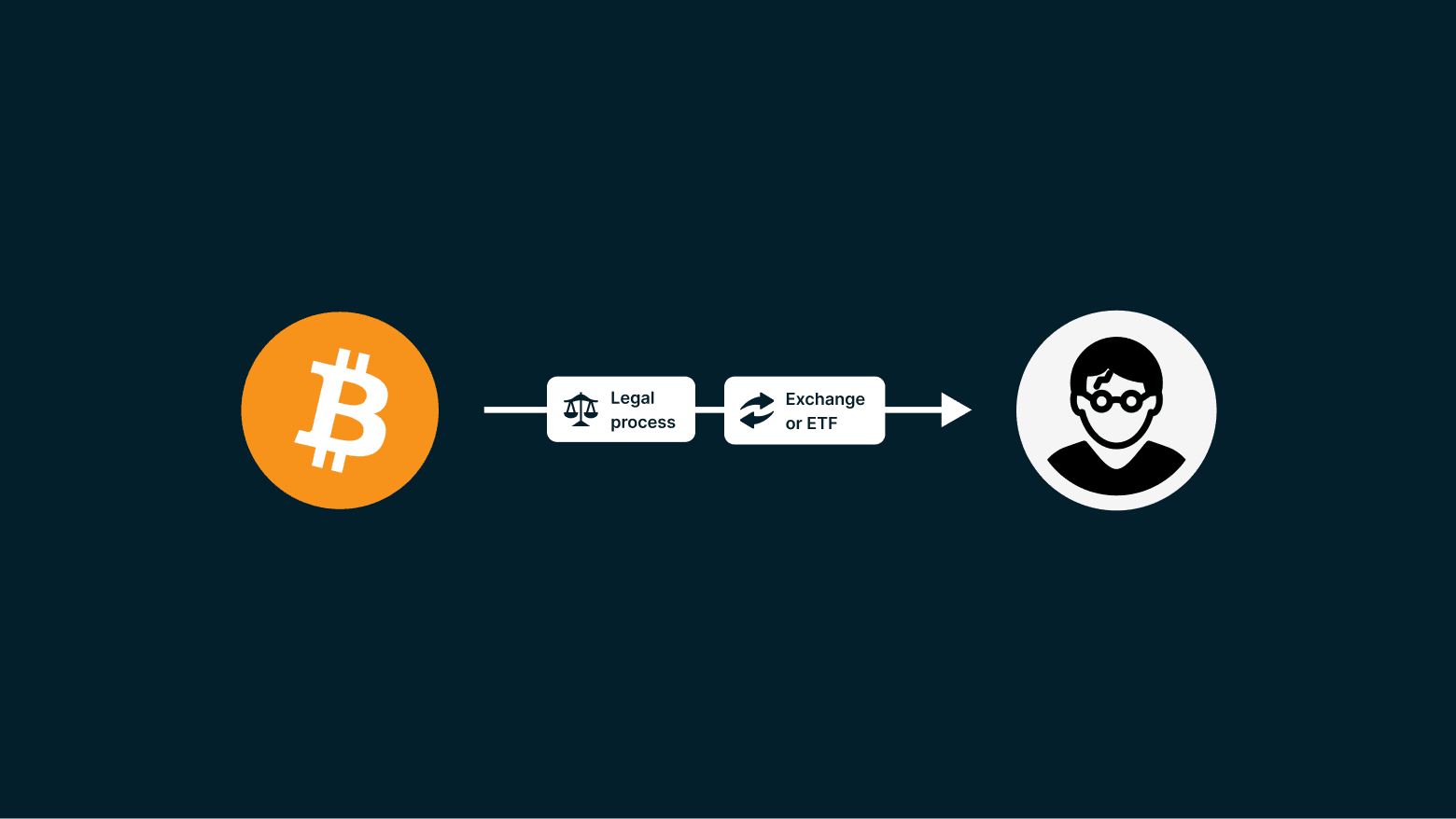
Description: Holding your Bitcoin on centralized exchanges (like Coinbase or Kraken), in Bitcoin ETFs, or with dedicated digital asset custodians.
Mechanism: The custodian controls the keys. Inheritance relies entirely on traditional legal processes, identity verification, and the custodian’s policies.
| Criteria | Evaluation |
|---|---|
| Sovereignty | Very Low. Maximum counterparty risk ("Not your keys, not your coins"). The custodian can freeze or seize assets. |
| Security | Medium. Vulnerable to large-scale hacks, bankruptcy, and government seizure, though protected by institutional controls. Most Bitcoin ETFs, in particular, rely heavily on the same centralized custodian, creating a massive systemic point of failure. |
| Heir Experience | Low. While the interface is familiar, heirs face a “Double-Intermediary Problem”: they must navigate both the exchange’s strict compliance bureaucracy and the traditional probate court system. This process is slow, often taking months or even years. Furthermore, probate records are often public, potentially exposing the identities of your heirs and revealing the value of their inheritance to criminals. |
| Privacy | Very Low. Mandatory KYC/AML compliance. Furthermore, centralized databases act as massive “honeypots” for hackers. History is replete with custodial data breaches where sensitive customer information (identities, home addresses, financial holdings) was leaked to criminals, increasing the risk of targeted physical attacks. Even major ETF issuers are vulnerable; in 2024, a Fidelity breach exposed over 77,000 customers' Social Security numbers and driver's licenses. |
| Flexibility | Medium. While Bitcoin ETFs usually allow beneficiary designation (Transfer-on-Death), most crypto exchanges do not. This forces assets into probate unless the account is registered to a trust — a feature often restricted to high-net-worth or institutional accounts. |
| Legal Integration | High. Fully integrated with the traditional legal system. |
Verdict: High convenience, zero sovereignty. This approach sacrifices the core benefits of Bitcoin for the familiarity of the legacy system.
3.2. Do-It-Yourself (DIY) Solutions (The Solo Sovereign Path)
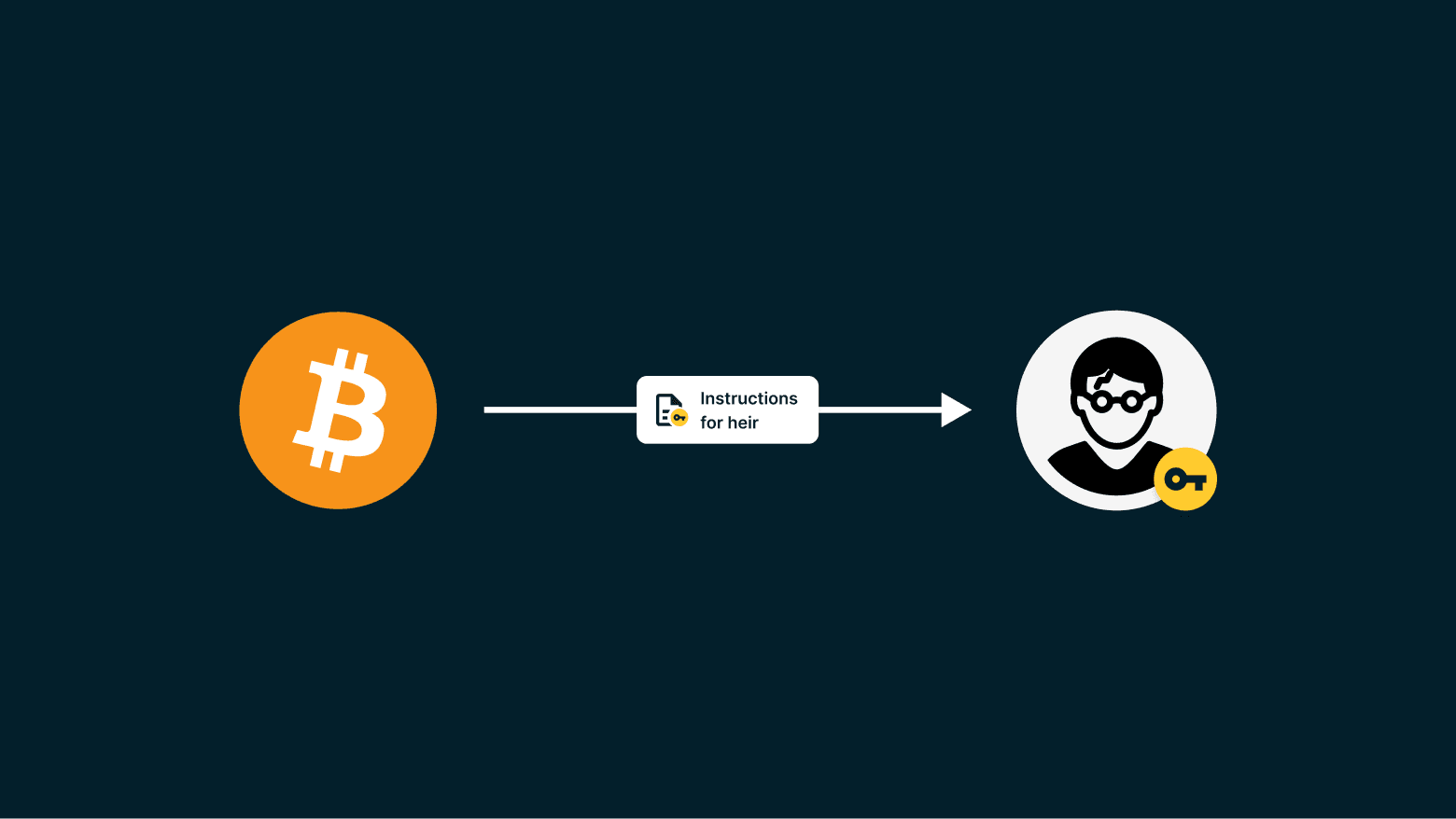
Description: The owner takes full responsibility for setting up and managing the inheritance plan without professional assistance.
Mechanism: There are several DIY methods, each with significant trade-offs and failure modes:
- Simple Backup/Cloning the Keyset: Providing a full copy of the seed phrase or hardware wallet to an heir.
- Failure Mode: High risk of theft during the owner's lifetime due to increased attack surface. Significant risk of physical attacks (extortion) against both the owner and heirs.
- Pre-signed Transactions (“Dead Man’s Switch”): Creating a valid Bitcoin transaction that sends funds to an heir’s address but is time-locked (using
nLockTime) so it can only be broadcast in the future.- Failure Mode: Operational Brittleness. This method is widely discussed but dangerous in practice due to three issues:
- UTXO Invalidation: If you ever send Bitcoin from your wallet or receive new coins to it, the pre-signed transaction may become invalid or fail to include the full balance. You must constantly re-sign new transactions.
- Fee Volatility: You must set a mining fee today for a transaction that will broadcast years from now. If fees spike, the transaction will get stuck; if they drop, you overpay significantly.
- Destination Rigidity: You must hard-code the heir’s destination address today. If that wallet is compromised or lost 10 years from now, you cannot redirect the funds without re-creating the entire setup.
- Failure Mode: Operational Brittleness. This method is widely discussed but dangerous in practice due to three issues:
- Shamir's Secret Sharing (SSS): Splitting the seed phrase into multiple shares and distributing them.
- Failure Mode: Extremely complex to execute correctly. SSS lacks a universal industry standard: shares created with one SSS tool are often incompatible with others, creating a "vendor lock-in" risk for your heirs. High risk of user error during setup or recovery.
- DIY Multisig/Timelocks: Setting up advanced protocols using open-source tools.
- Failure Mode: High technical complexity. Zero support for heirs.
| Criteria | Evaluation |
|---|---|
| Sovereignty | Very High. Minimal reliance on third parties. |
| Security | Variable. High risk of user error. Simple backups are highly vulnerable to theft and physical attack; expert setups are very secure. |
| Heir Experience | Very Low. High burden on heirs. Complex recovery processes with no support. |
| Privacy | High. No KYC required. |
| Flexibility | Low. Complex to modify plans securely. |
| Legal Integration | Low. Difficult to implement correctly without professional technical assistance. |
Verdict: Maximum sovereignty, but also maximum complexity and risk. This path demands a high level of technical proficiency from both the owner and the heirs and carries a significant risk of error.
3.3. Assisted Collaborative Custody (Off-Chain Solutions)
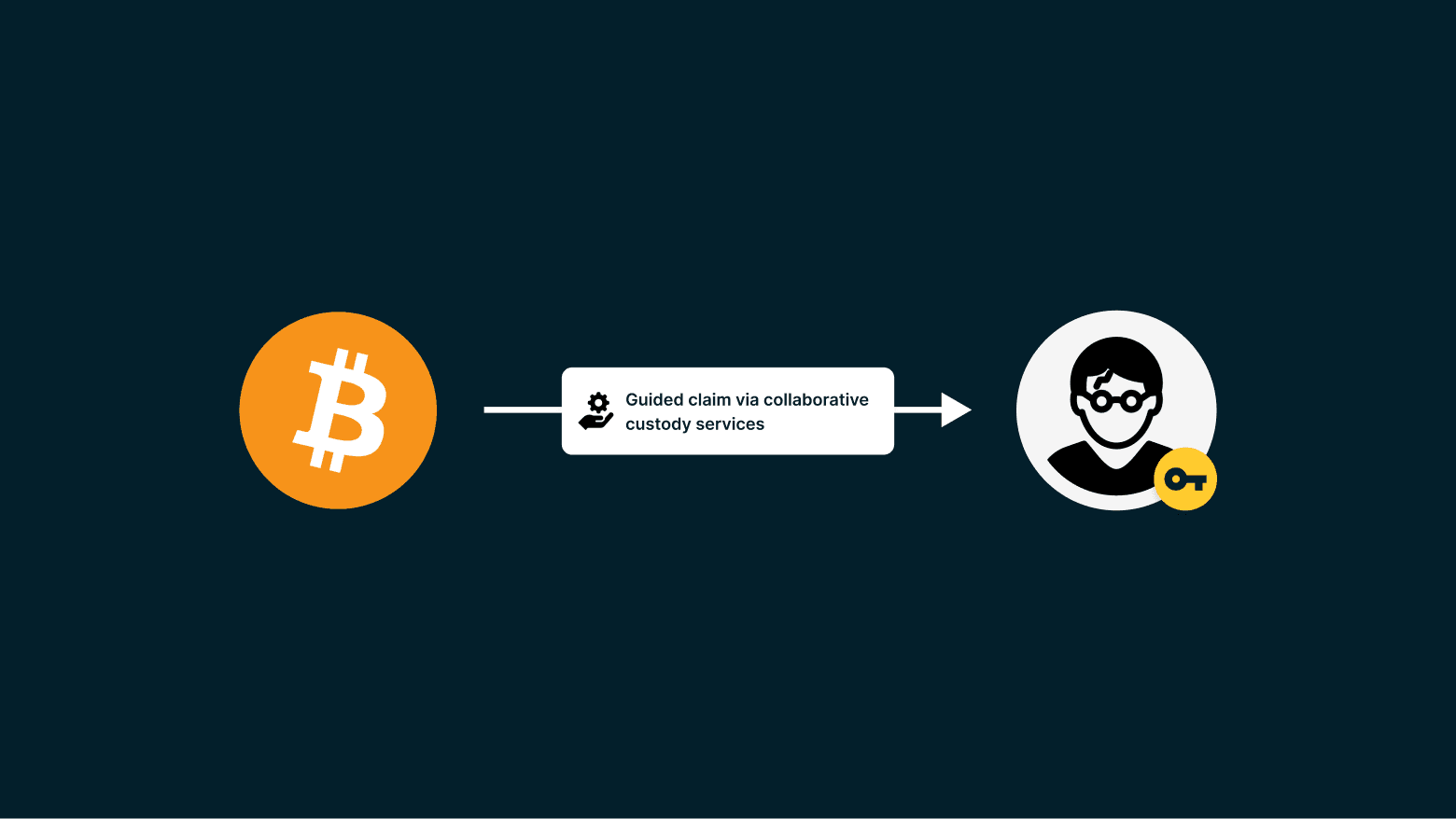
Description: A significant improvement over DIY and custodial approaches. These services assist users in setting up a multisig wallet, where the provider holds one key and the user holds the others.
Mechanism: The inheritance logic—such as a required waiting period (timelock) or liveness checks—is managed off-chain by the provider's platform. To claim the inheritance, the provider must actively participate, either by co-signing the transaction or releasing their key after verifying the claim or the owner's inactivity.
Examples: Nunchuk (Off-chain protocol), Casa, Unchained Capital, Bitkey.
| Criteria | Evaluation |
|---|---|
| Sovereignty | Medium. While the user controls the majority of the keys, the inheritance process relies entirely on the provider's active participation. This is the "Resilience Gap": if the provider fails, the inheritance plan may fail. |
| Security | High. Multisig provides robust security and eliminates single points of failure. |
| Heir Experience | High. Providers offer guided support for heirs (The "Smooth Path"), significantly reducing complexity. |
| Privacy | Variable. While the technology itself does not mandate KYC, many providers implement mandatory identity verification (e.g., Unchained) or conditional KYC for expedited recovery (e.g., Casa). However, truly non-KYC solutions (like Nunchuk) exist in this category. |
| Flexibility | High. Because the logic is off-chain, plans are easy and inexpensive to update. |
| Legal Integration | High. Easy to optionally integrate with trustees and estate plans. |
Verdict: A strong balance of security and convenience, but still reliant on the provider’s long-term survival. Users prioritizing privacy must carefully select a provider committed to non-KYC practices.
3.4. Autonomous Collaborative Custody (On-Chain Solutions)
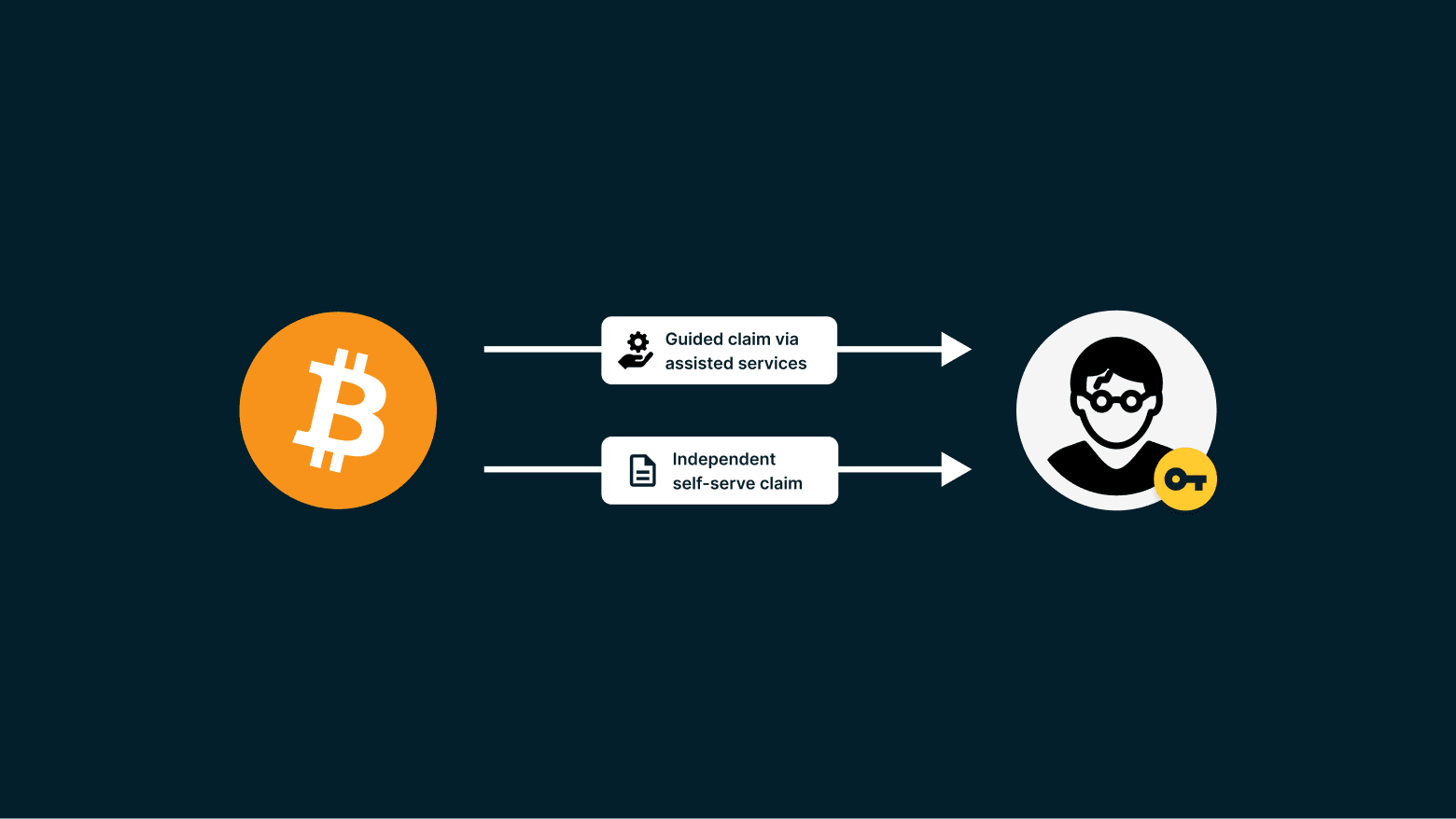
Description: The newest paradigm in Bitcoin inheritance. This approach combines the convenience and security of assisted collaborative custody with the resilience of autonomous execution enforced by the Bitcoin network itself.
Mechanism: Utilizing advanced Bitcoin technologies like Miniscript, the inheritance logic (the timelock) is embedded directly into the Bitcoin blockchain (on-chain). When the timelock expires, the requirements to move the funds automatically change, allowing the heir to access the funds without the provider's involvement.
This creates a "Smooth Path + Failsafe" model:
- The Smooth Path (Assistance): As long as the provider is operational, they offer guided assistance and support to the heirs for a seamless recovery process.
- The Failsafe (Autonomy): If the provider is unavailable or ceases to exist, the on-chain timelock guarantees that the heirs can still recover the funds autonomously using open-source tools.
Examples: Nunchuk (On-Chain Protocol).
| Criteria | Evaluation |
|---|---|
| Sovereignty | Very High. Maximum trust-minimization. The plan is designed to outlive the company that created it. |
| Security | High. Built on robust multisig architecture. |
| Heir Experience | High. Offers the convenience of the "Smooth Path" (guided assistance), backed by the guarantee of the "Failsafe" (autonomous recovery). |
| Privacy | High. Can be implemented with zero KYC (as Nunchuk does), relying on cryptographic proof rather than identity. |
| Flexibility | Medium. Because the plan is enforced on-chain, modifying it (e.g., changing the timelock duration) requires migrating the funds to a new wallet, incurring network fees. |
| Legal Integration | High. Can be configured to optionally involve trustees and integrate with estate plans. |
Verdict: The optimal balance. This approach eliminates the “Resilience Gap” of off-chain solutions, offering the highest level of sovereignty and privacy without compromising on security or heir experience.
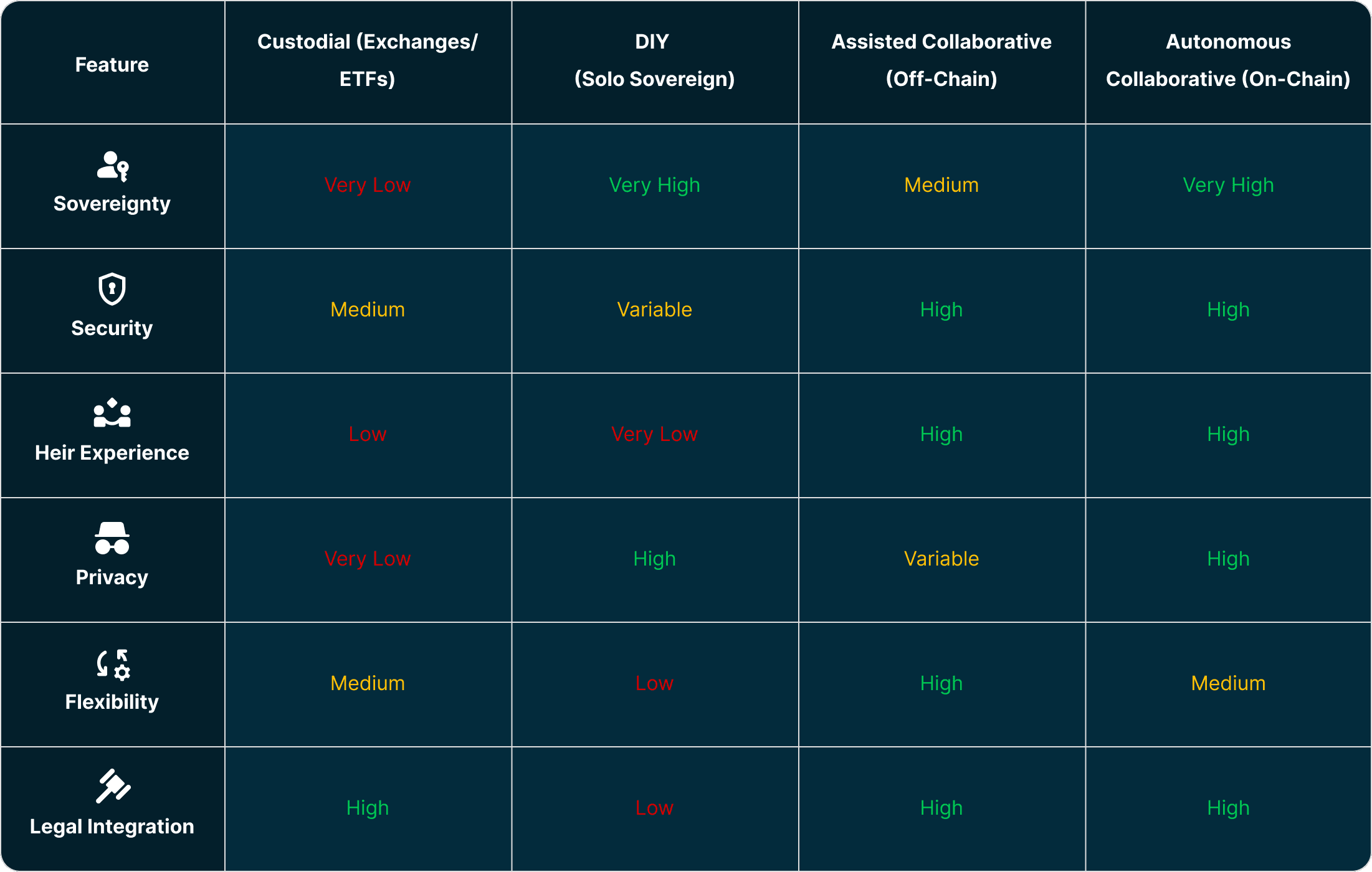
The Bitcoin Inheritance Landscape at a Glance
The following table summarizes the trade-offs between the different approaches:
Chapter 4: The Optimal Balance: Autonomy Meets Assistance
The evolution of Bitcoin inheritance solutions has been a journey towards greater trust-minimization while improving usability.
The introduction of Autonomous Collaborative Custody (Category 4) represents a paradigm shift. It resolves the central tension between the need for assistance and the requirement for sovereignty.
The “Smooth Path + Failsafe” model acknowledges that while autonomous recovery must be possible, assisted recovery is preferable.
- The Smooth Path provides peace of mind. It ensures that during a difficult time, heirs have access to expert guidance, reducing anxiety and the risk of technical errors. This ongoing assistance is the primary value of a relationship with a collaborative custody provider.
- The Failsafe provides resilience. It guarantees that your legacy is protected under any circumstances, enforced by the immutable rules of the Bitcoin network.
This dual-path approach offers the best of both worlds: the convenience of a premium service today, backed by an autonomous guarantee for tomorrow.
Chapter 5: Integrating Bitcoin with Traditional Estate Planning
One of the most powerful aspects of Bitcoin is its ability to facilitate private, direct transfer of wealth. Because the Bitcoin network operates purely on cryptographic keys — not recognizing court orders or identity — it enables the direct technical transfer of assets, bypassing the delays and public exposure often associated with traditional probate.
However, some individuals may prefer to integrate their Bitcoin holdings into a formal estate plan, such as a will or trust. A robust Bitcoin inheritance solution should offer the flexibility to support this choice.
The Role of Trusts and Trustees
You may want a controlled distribution of assets rather than an immediate lump sum, or you may want a trusted advisor to manage the process. This is where involving a Trustee can be beneficial.
Collaborative custody solutions (both off-chain and on-chain) can facilitate this integration:
- Involving a Trustee: The trustee can be designated as the primary beneficiary who executes the claim process, rather than the ultimate heirs. The Trustee is then legally obligated to distribute the assets according to the terms of the trust.
- Splitting Secrets: You can structure the inheritance setup so that the heir possesses the necessary keys, but a legal professional (like an estate lawyer or trustee) possesses the necessary instructions or configuration files (the “map” to the vault). Both parties must collaborate to access the funds, ensuring the process adheres to the structure of the estate plan.
A Note on Tax Implications
While Bitcoin is a decentralized protocol, inheritance is a taxable event in most jurisdictions. Proper planning can have significant financial benefits.
- Step-Up in Basis: In jurisdictions like the United States, inheriting an asset often resets its cost basis to the fair market value at the time of the owner’s death. This can significantly reduce capital gains taxes for your heirs if they sell.
- Estate Taxes: If the total value of your estate (including Bitcoin) exceeds certain thresholds, estate taxes may apply.
A robust inheritance plan ensures your heirs can access the keys not just to claim the wealth, but to liquidate a portion if necessary to cover these tax liabilities within legal deadlines.
Conclusion: The Evolution of Legacy
Securing your Bitcoin for the next generation is the final step in your journey to financial sovereignty.
The technology for Bitcoin inheritance has evolved significantly. We have moved from the high risks of custodial solutions and the high complexity of DIY methods to the balanced approach of collaborative custody.
Today, the emergence of autonomous, on-chain solutions marks a new standard. By leveraging the power of the Bitcoin protocol, we can now create inheritance plans that are truly trust-minimized — designed to withstand the test of time and outlive the companies that build them.
By choosing a solution that provides a guided “Smooth Path” for your heirs, backed by an autonomous “Failsafe,” you can ensure your hard-earned wealth is secure for generations to come.
Disclaimer: The information provided in this guide is for general informational purposes only. It should not be construed as financial, investment, tax, or legal advice. Bitcoin ownership and inheritance involve significant technical and legal complexities that may vary by jurisdiction. You should consult with qualified professionals before making any decisions regarding your estate planning.